

Jammu & Kashmir IST 2026: Strengthening Vocational Training Through Skill and Innovation
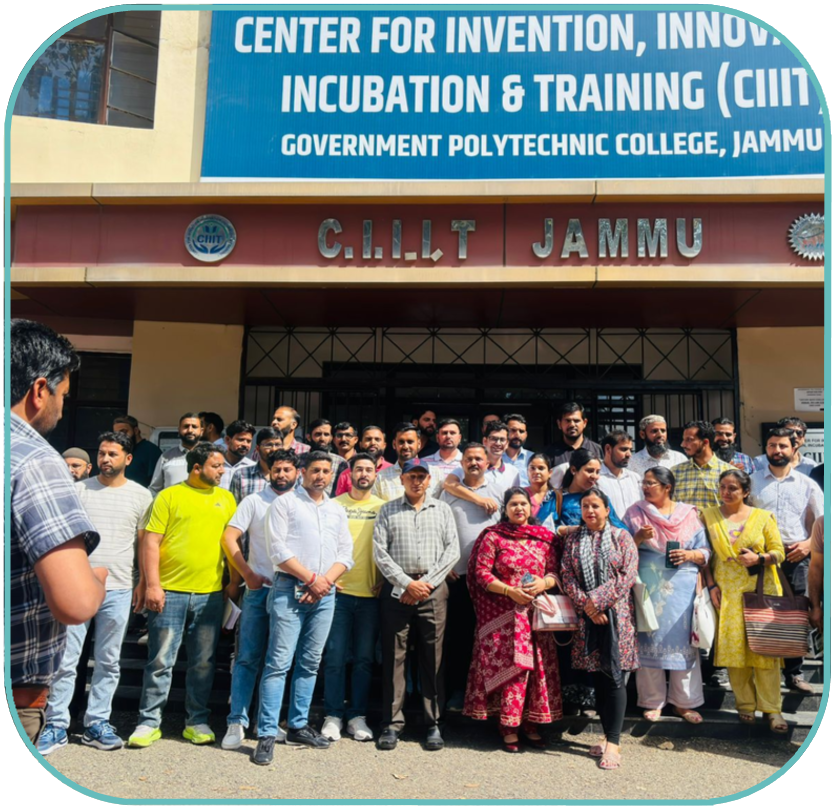
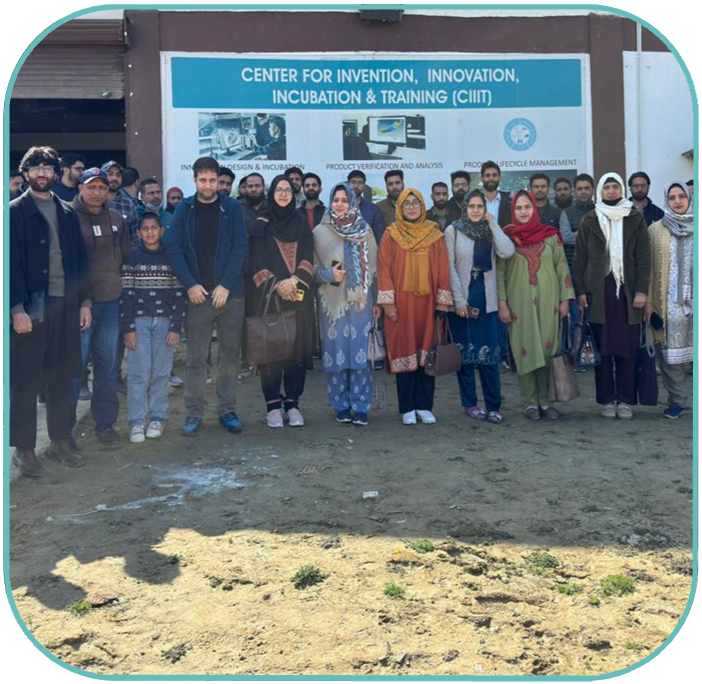
From 10th to 13th March 2026, an enriching In-Service Training (IST) program was conducted in Jammu & Kashmir for vocational trainers under the IT/ITeS and Electronics & Hardware trades. The four-day capacity-building program was organized at two major centers — CIIIT Vikram Chowk, Jammu and CIIIT Baramulla, Kashmir — bringing together trainers working under Laqsh Job Skills Academy for a shared journey of learning, collaboration, and professional growth.
A total of 110 vocational trainers actively participated in the IST, including 38 trainers from IT/ITeS and 72 trainers from Electronics & Hardware. The training was designed not only to strengthen technical knowledge but also to help trainers enhance practical classroom delivery and keep pace with changing industry needs.
The IST served as an important platform where trainers refreshed their subject knowledge, learned updated practices, and exchanged ideas with fellow educators. Throughout the four days, the atmosphere at both training centers was filled with energy, participation, and a common commitment toward improving vocational education.
Building Stronger Vocational Educators
The core objective of the training was to empower trainers with practical skills and modern teaching methods so they can better prepare students for employment, entrepreneurship, and real-world work environments. Vocational education plays a vital role in making students job-ready, and this begins with skilled and confident trainers.
The program focused on going beyond theory and giving more emphasis to hands-on learning. Sessions were designed to help trainers improve technical proficiency, revise earlier concepts, and strengthen their confidence in delivering practical demonstrations to students.
Experts and resource persons guided the participants through structured sessions, demonstrations, and group activities, making the learning process highly engaging and interactive.
IT/ITeS Trade Sessions
The IT/ITeS sessions during the IST focused on strengthening both technical knowledge and practical teaching skills of the trainers. Spread across three days, the sessions covered programming, web development, data handling, automation, and creative coding through hands-on activities and demonstrations.
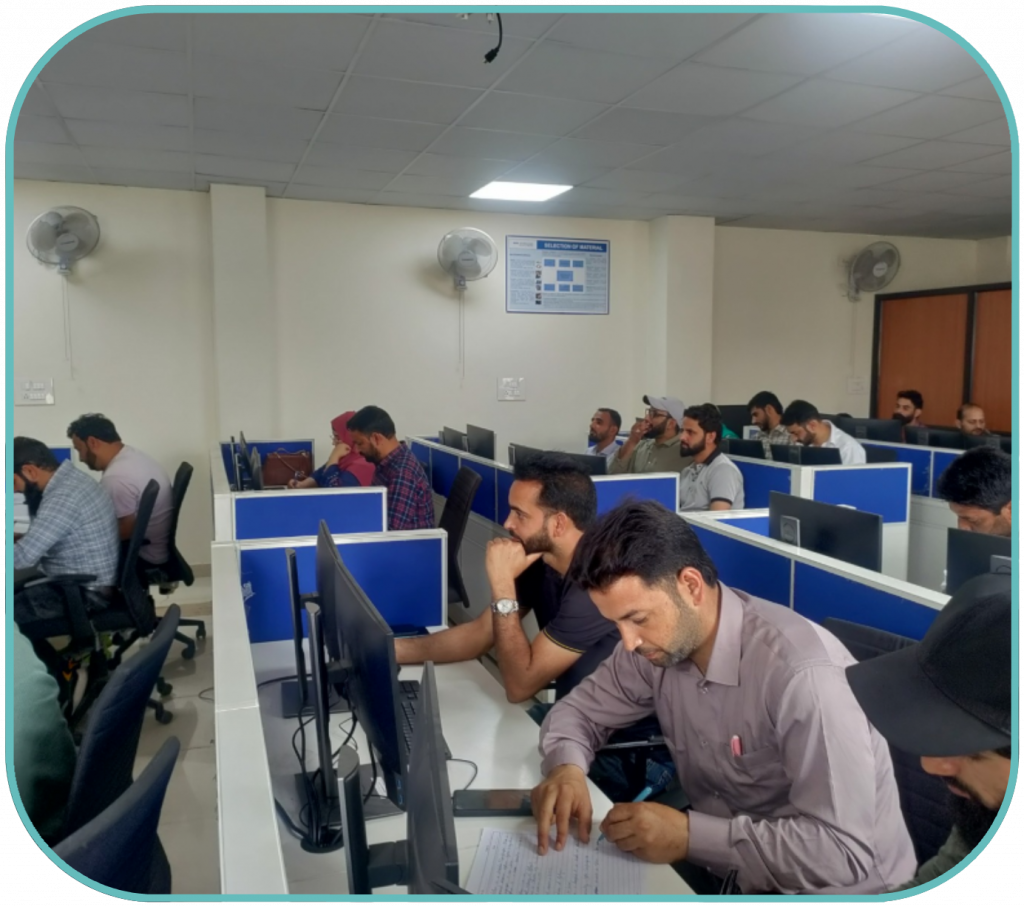
The training began with Python Programming, where trainers explored important programming concepts such as switch-case implementation using functions, logical programming, sorting methods, and pattern-based coding. Sessions on Object-Oriented Programming (OOPs) helped participants understand concepts like classes, objects, inheritance, and polymorphism through practical examples. Trainers actively participated in coding exercises and discussions that made the sessions engaging and application-based.
A key highlight was the session on Django and Web Development, where trainers learned how to set up Django, understand project structure, and create a basic login page using Django and Bootstrap. Practical demonstrations on template integration, testing, and debugging gave participants hands-on exposure to web application development. Another interesting session introduced trainers to running Python programs on mobile devices, showing how coding can also be practiced through Android-based environments.
The training also included sessions on Excel and Automation, where participants refreshed their understanding of data entry, sorting, filtering, formulas, page setup, and printing options. Trainers were introduced to Macros and basic automation tasks, helping them understand how repetitive processes can be simplified using Excel tools. A highly engaging part of the training was Scratch Programming, where trainers learned block-based coding by developing an interactive Trash Sorting Game. Through sprites, backdrops, control blocks, scoring, and game logic, participants explored creative ways to teach coding concepts to school students in a simple and fun manner.
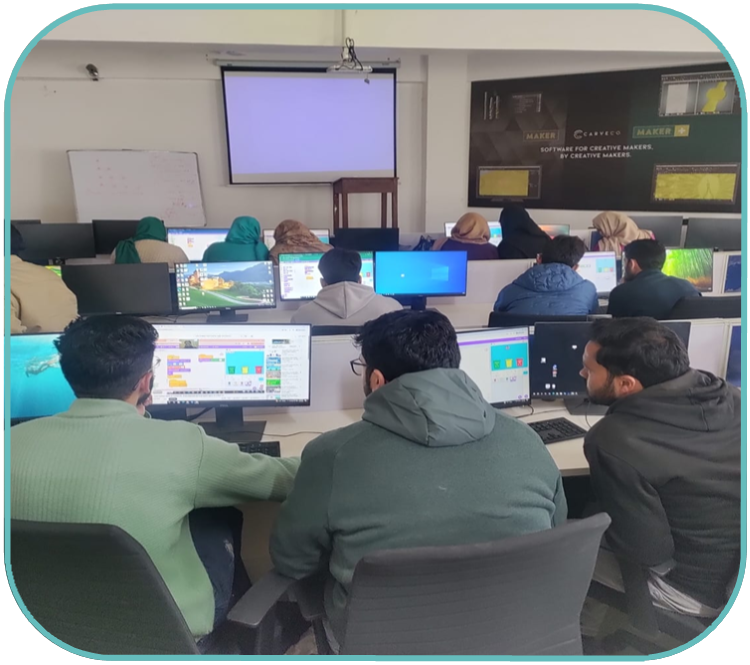
The sessions followed a practical and interactive approach with demonstrations, guided exercises, project-based learning, and discussions. Trainers exchanged ideas, clarified concepts, and worked through activities that connected technical learning with classroom application.
Overall, the IT/ITeS sessions provided valuable exposure to updated tools and technologies while helping trainers build confidence in delivering more practical, engaging, and industry-relevant learning experiences for their students.
A major highlight of the IST was the practical technical training in Repair and Maintenance of Domestic Electrical Appliances.
This module was designed to help trainers gain deeper understanding of appliance functioning, troubleshooting methods, safety practices, and structured technical explanations for classroom teaching.
The training followed a Station Rotation Model, along with Practical Demonstrations and Group Presentations, creating an engaging hands-on learning environment.
Participants were divided into groups and rotated through different practical stations, ensuring exposure to multiple technical areas.
Station 1: Air Conditioner Repair
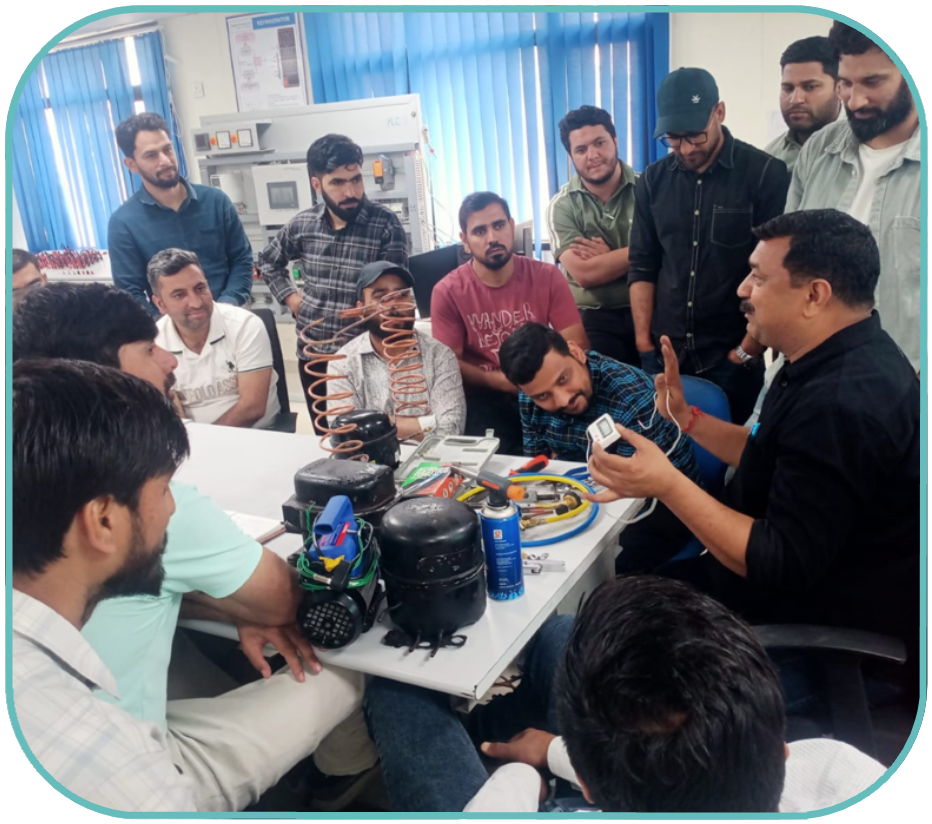
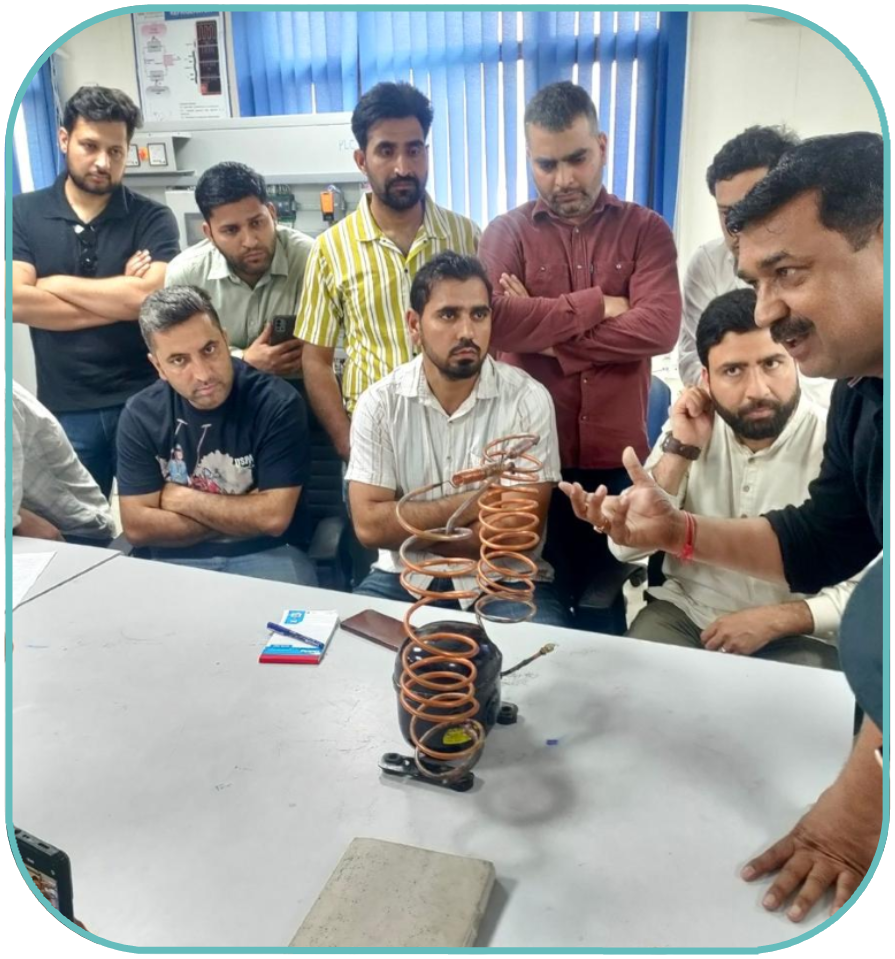
At the AC Repair Station, trainers explored the working principle of the refrigeration cycle and learned about components such as compressors, condensers, evaporators, thermostats, and capacitors.
Sessions covered common faults such as: Cooling issues, compressor problems, gas leakage, PCB faults. Participants also practiced using diagnostic tools like multimeters, clamp meters, and manifold gauges. Preventive maintenance and installation basics were also discussed. The practical exposure made the sessions highly valuable for trainers who would later demonstrate these concepts to students.
Station 2: Electric Iron and LED Repair
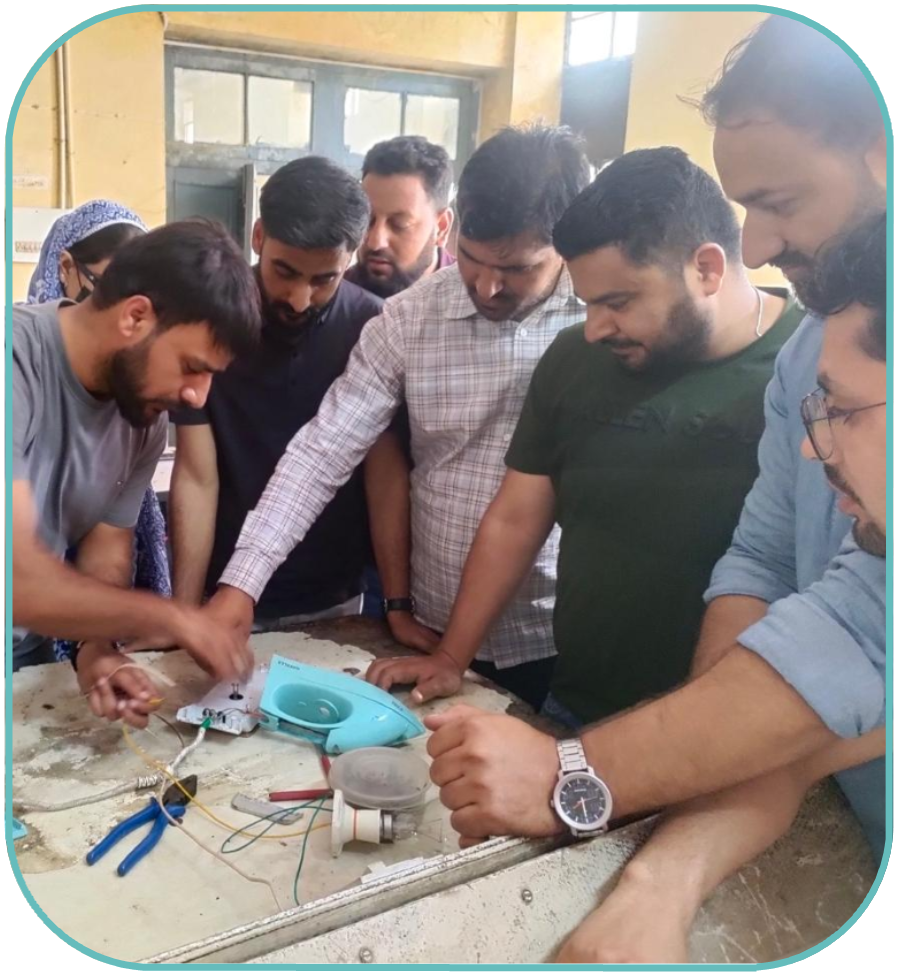
Another technical station focused on repair and maintenance of electric irons and LED lights.
For electric irons, participants learned about: Heating elements, thermostat controls, common heating faults ,testing and fault diagnosis
For LED repair, sessions covered: LED driver circuits, driver board components, rectifiers and capacitors, flickering and dead LED troubleshooting , replacement and soldering techniques. The hands-on approach helped trainers strengthen both conceptual understanding and repair skills.
Station 3: Air Cooler Repair
At the Air Cooler station, trainers learned about evaporative cooling systems, components, and maintenance practices.
Topics included: Pump and motor functioning, fan blades and float valves, wiring understanding, water leakage issues, safety precautions, troubleshooting common cooler faults. The sessions helped participants better understand practical repair methods that can be transferred directly into vocational classrooms.
Station 4: Fan Repair
The Fan Repair station focused on ceiling, table, and exhaust fans. Trainers explored: Single-phase induction motor principles, role of capacitors, speed control mechanisms, fault diagnosis, bearing issues, rewinding basics. Through demonstrations and discussions, participants developed stronger troubleshooting approaches and repair knowledge.
The station rotation method encouraged trainers to actively participate and learn by doing. Group presentations also helped participants share ideas, discuss challenges, and learn from each other’s experiences. This made the training more engaging and interactive. The IST also became a platform for trainers from across Jammu & Kashmir to connect and exchange experiences.
Participants discussed classroom challenges, shared teaching methods, and learned practical solutions together. Many trainers appreciated the chance to refresh their existing knowledge while also learning updated industry practices. The collaborative environment reflected everyone’s commitment to improving vocational education.
The IST highlighted the importance of regular skill development for vocational trainers. As technology and industry needs continue to change, trainers must stay updated with practical and industry-relevant knowledge.
Conclusion
The Jammu & Kashmir IST 2026, held at CIIIT Vikram Chowk and CIIIT Baramulla, was more than just a training program. It became a strong platform for practical learning, collaboration, and skill development in vocational education.
With 110 trainers participating across IT/ITeS and Electronics & Hardware, the IST successfully combined hands-on practice, technical learning, and peer interaction.
As trainers return to their classrooms with improved knowledge and confidence, the benefits of this program will continue through the students they teach and inspire.






Student's Corner
Simran
Simran, a student from GGSSS Railway Mandi Hoshiarpur, transitioned from her early love for art to a successful career in IT. After completing her 12th grade, she embraced an apprenticeship at Prabhnoor Collection, leading to her role as a Trainer at Advance Net Institute, earning Rs 3000 monthly. Her journey highlights the transformative power of adaptability and passion.
November 16, 2018
Twinkle Kumar
Twinkle Kumar, an IT&ITes student, works as a Computer Operator at Sanjivini Hospital, earning Rs 3500 monthly. His passion for computers and determination to learn have driven his success. Twinkle’s journey, marked by dedication and an infectious smile, highlights the importance of taking the first step toward one’s goal.
November 16, 2018
Manpreet Singh
Manpreet Singh, a dedicated IT&ITes student, has been thriving at Punjab Diagnostic Lab for three years, earning Rs 2000 monthly. Beyond technical skills, he cherishes the strong camaraderie among colleagues. His journey exemplifies the perfect blend of professional growth and a supportive, lively work environment.
November 16, 2018
Ankush Kumar
Ankush Kumar, an IT student from GSSS Nara, Hoshiarpur, turned his passion into success with guidance from his vocational trainer, Mr. Arvind Kumar. Employed at Sabi Photographers, Ankush earns Rs 1500 monthly, building a promising IT career.
November 16, 2018
Davinder Singh
Davinder Singh, a student from Govt. Girls Sen. Sec. School Ranipuri, Kapurthala, turned his passion for computers into a part-time job at KFC as a store operator. With a salary of Rs 8000, Davinder balances work and studies, supporting his family and educational goals.
November 16, 2018
Karamveer Singh
Karamveer Singh, a student from Govt. Girls Sen. Sec. School Parwahi, Barnala, excels in IT through his apprenticeship at Star Shine Barnala, earning Rs 3000 monthly. His goal is to open his own internet shop, combining his love for technology with entrepreneurship.
November 16, 2018
Kritika
Kritika, a student from Govt. Girls Sen. Sec. School Mahan Singh Gate, Amritsar, excelled in IT/ITeS, earning an apprenticeship at Pappu Stationary Books Depot. She embraced roles like billing and printing, leading to a job offer with a monthly salary of Rs 2500. Kritika's dedication inspires all.
November 16, 2018
Khushdeep Singh
Khushdeep Singh, a student from GSSS Jourkian, Mansa, turned his passion for computers into a remarkable journey. Selected for an apprenticeship at Dashmesh Computers, he mastered operating systems and CPU repairs, earning respect and a stipend. Khushdeep's dedication and future aspirations serve as an inspiration to all.
November 16, 2018